Showing posts with label media art mentorship. Show all posts

Tuesday, April 29, 2008

The Birds Path (after Herschel)


About above (part 2) -
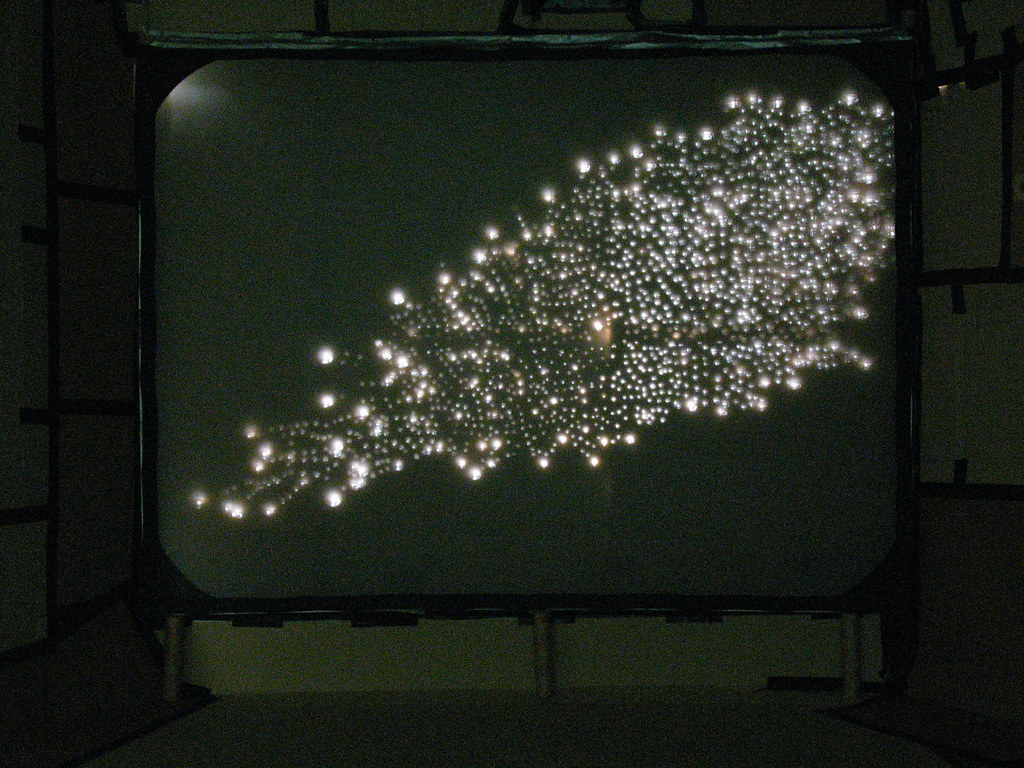
installation view
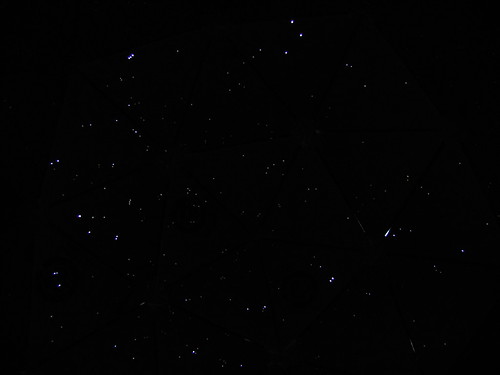
a camera obscura starmap, installed in a darkened room... the luminous image is created from a pinhole-and-screen version of William Herschel's 17th Century depiction of the Milky Way
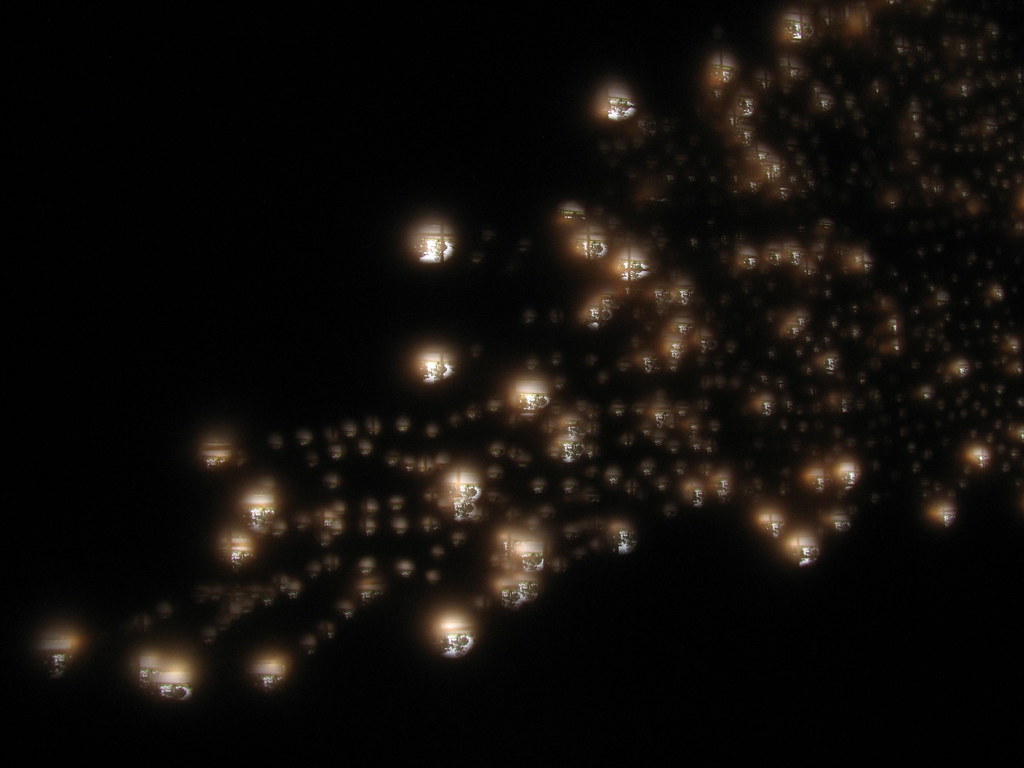

detail - with direct sunlight in late afternoon
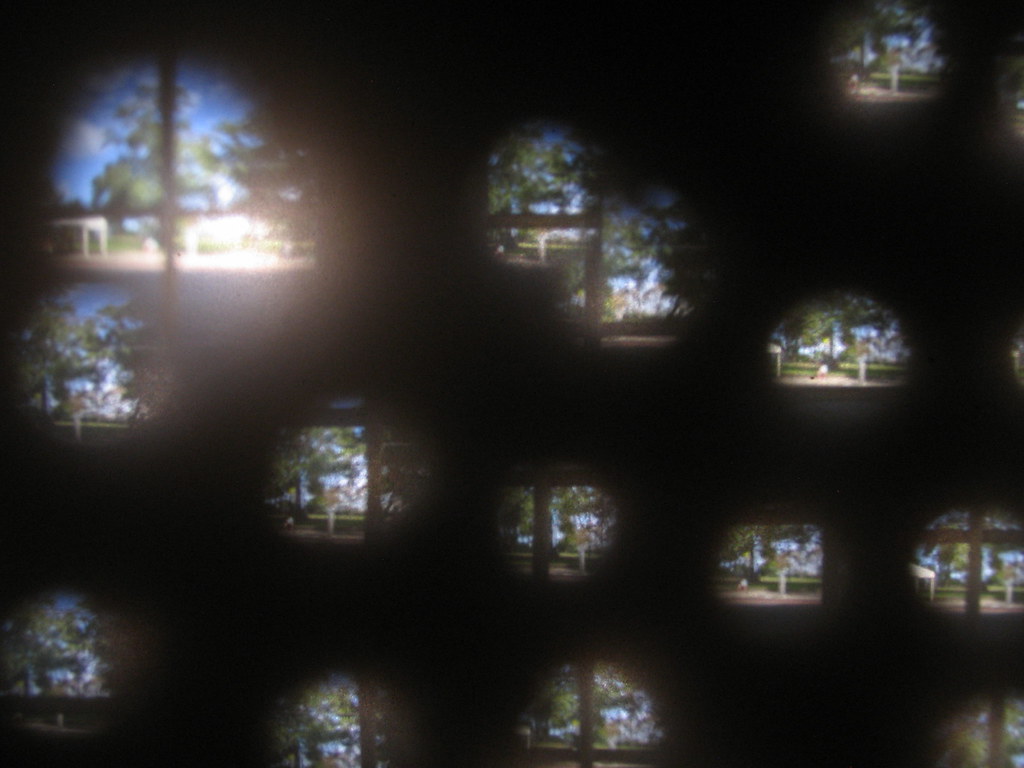

detail - showing the park and trees outside the gallery window (image has been rotated 180º so you can see the park more clearly)

Some photos from the exhibition... all went well - good feedback, good attendance. I am happy with this little project.

The camera obscura effect created by the installation was something that I thought would be immediately recognisable to everyone that entered the darkened space - but not so, it seems... many people thought it was just light, which moved and got blurry sometimes (that 'blurriness' was the tiny upside-down pictures of trucks and buses passing by outside on Chalmers St).

I really liked how, on a rainy day, the whole effect was this soft, blue light, with little flashes of colour (people passing by in brightly-colored raincoats). And on a sunny day, in the late afternoon, the setting sun created a brilliant array of points of light, a mosaic of tiny pictures of the actual sun setting behind the fig trees of Prince Alfred Park.


myself and Fiona Hall inspecting the camera obscura for quite some time on a rainy afternoon...

I even managed to drag Fiona Hall along to see it and give me some feedback - we spent a couple of hours inside the installation, chatting and watching... Fi had a lot of thoughts to offer (as usual), which was fabulous - we discussed that fine line between over-explaining a work, and providing sufficient information so that the audience would have a sense of 'what it was all about'.

What I love about Fiona's work is how her objects reel you in with their seductive qualities, and while you're examining it you start getting the actual point of the thing (which isn't just what it looks like and in made of)... yes yes, i know that's part of 'art making 101', but still - that balance between the beguiling surface and the layers underneath it is something that I think is very relevant, especially in this world that we live in, right now.
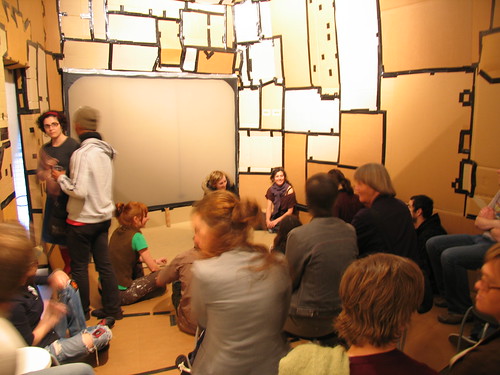

Artist talk time, on the last day of the exhibition - we turned the lights off once everyone was inside and I spoke about the work in the darkness with the starmap glowing happily - the most eerie artists' talk I have ever done...
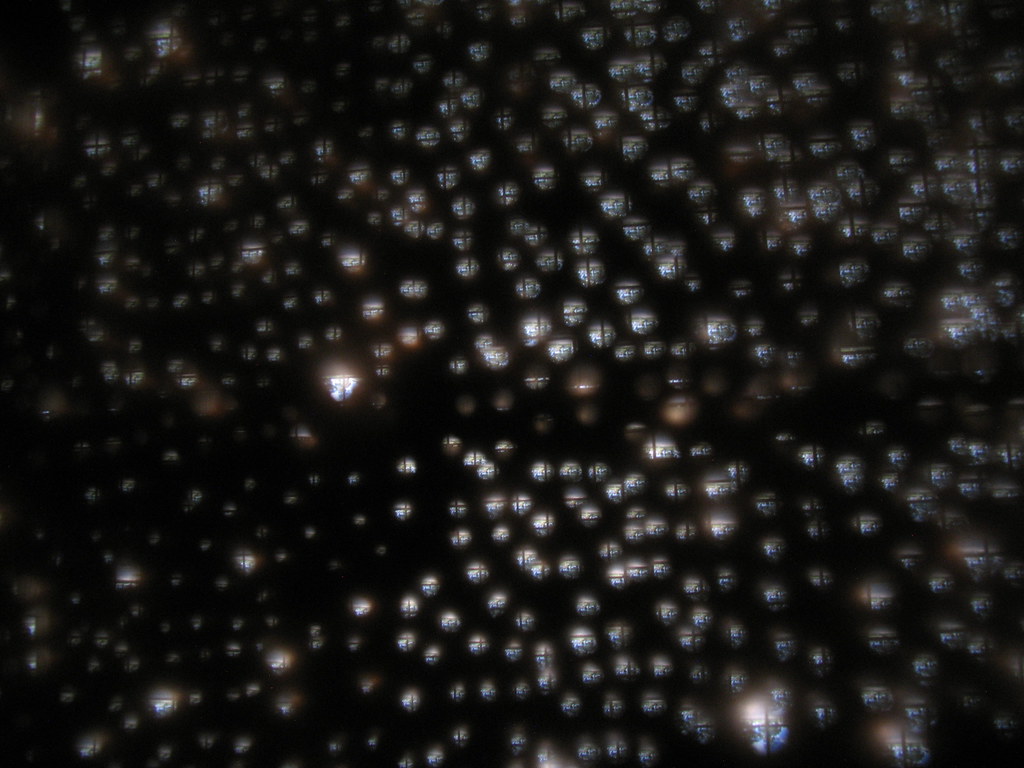

detail - (cloudy day)


So. The exhibition. 3 weeks of showing and an artist talk later, it's all done and dusted and currently being mulched at some cardboard recycling plant in southern Sydney. But permutations of the project seem to be putting out feelers - the Ergas Collection are featuring one of my solar-powered cardboard planetariums in a show in Melbourne in July. And it also looks likely that I'll be making some more for Sydney Observatory's 150th anniversary in June this year... so we shall see where where these cardboard universes take me...

Photos of the installed exhibition are here - and the cache of photos for About, above as a project in its entirety can be found here.
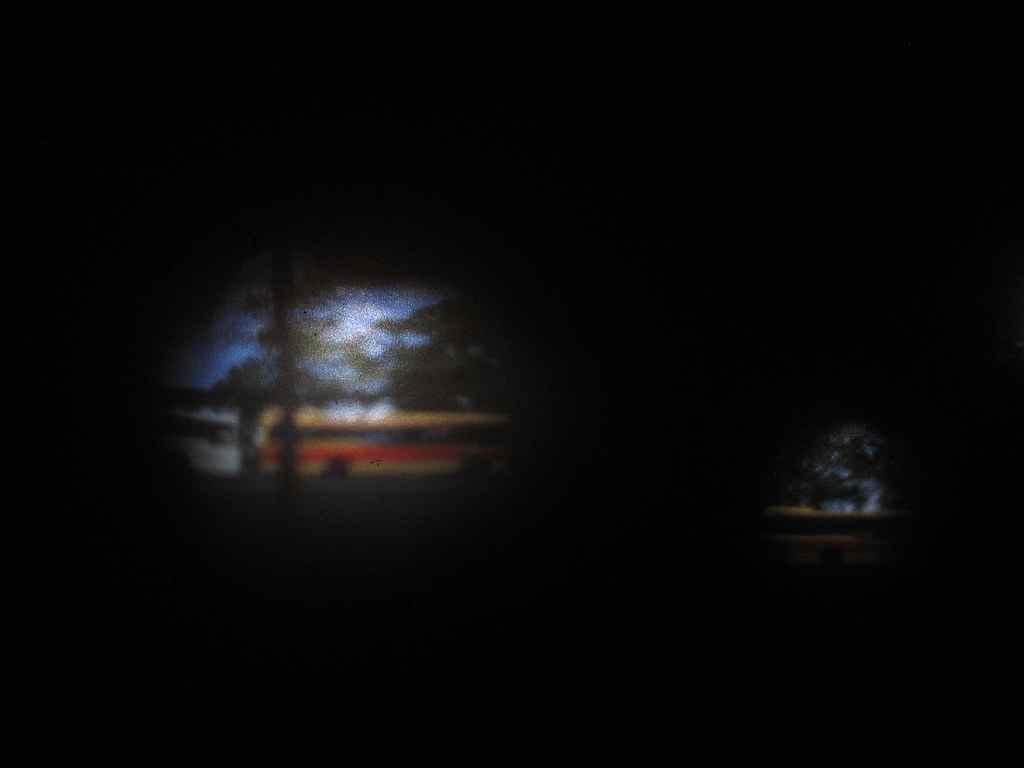

detail - bus parked outside
(image has been rotated 180º so you can make out the bus more clearly)


view of Firstdraft Gallery 3, as seen from the street outside
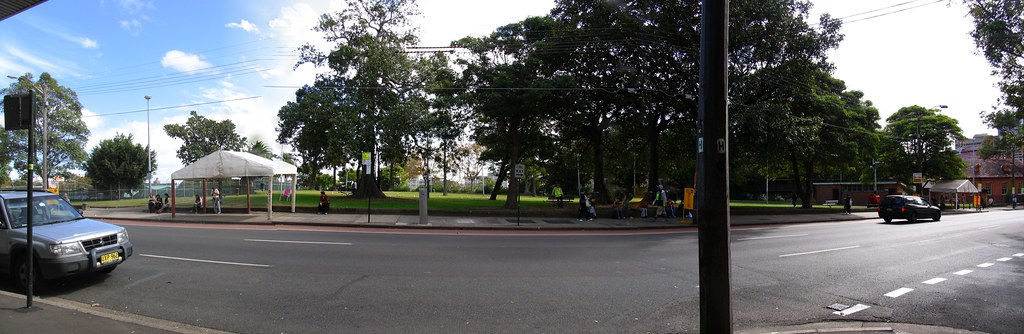

view of street outside gallery, as seen from the west-facing window which contained the camera obscura... this was the view that made up the tiny pictures
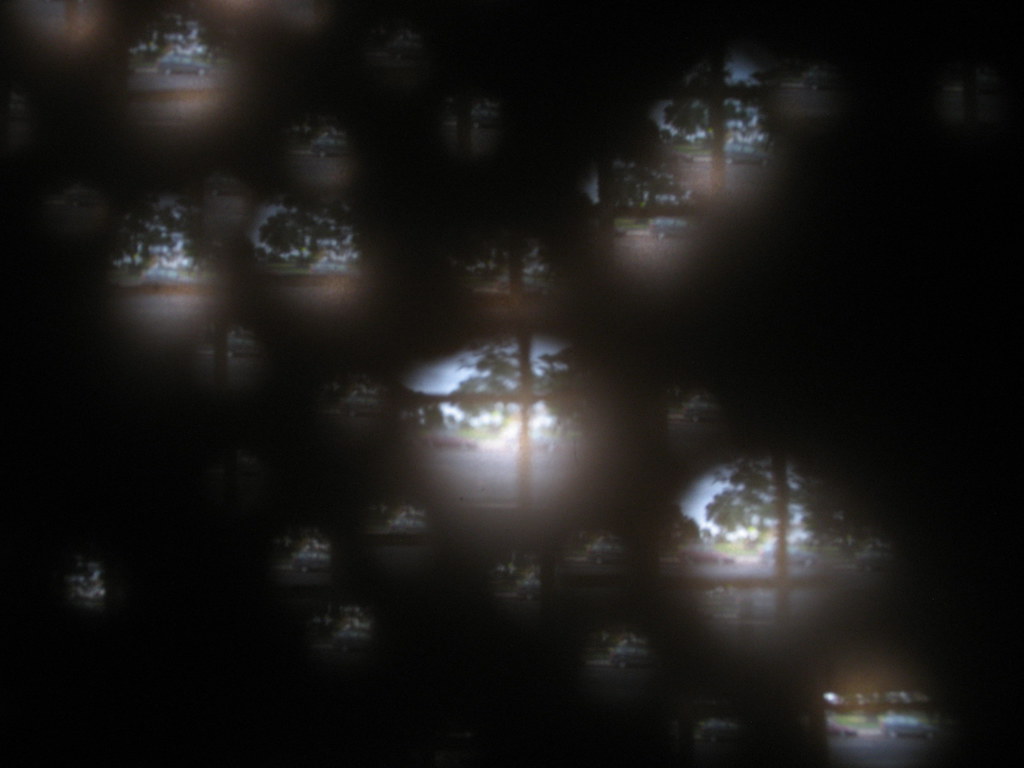

detail - showing the park and trees outside the gallery window (image has been rotated 180º so you can see the park more clearly)

Saturday, March 8, 2008

Fiona Hall: Force Field (all over, red rover)


Castles in the air of the cavedwellers (detail)
Fiona Hall - 2007-08 - resin

And now, everything is in its place, or in its case. The show is open, and the experience of setting up the show is at an end. The book has been launched, the opening has been had.

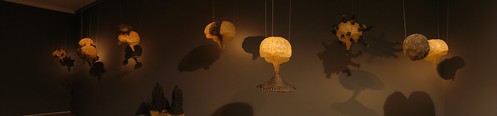
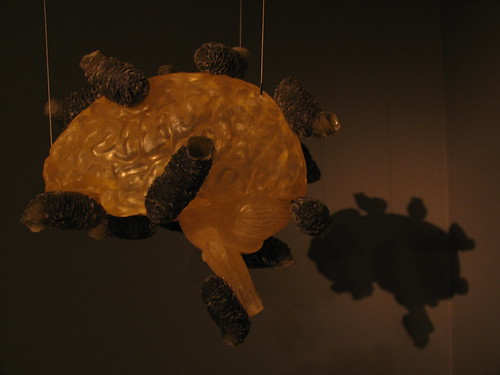
And so the worlds that hang from the brains of Castles in the Air of the Cave Dwellers are lazily rotating on their strings, to the breath and the airflow of passing crowds, who either stop and stare fascinatedly, or brush past in search of something else to look at.

*sigh*...

On the up side of things, however, I managed to worm my way into the interview that Fiona did with the Australian yesterday... I so like it when people call me a 'young Sydney Artist'... it makes me want to wear shorts and get tipsy and ignore my Business Activity Statement...

I've stashed all the documentation photos of the install process of Fiona Hall: Force Field here.


Castles in the air of the cavedwellers (detail)
Fiona Hall - 2007-07 - resin


Mourning Chorus (detail)
Fiona Hall - 2007-08 - resin, plastic, vinyl, electronics, vitrine


Mourning Chorus (detail)
Fiona Hall - 2007-08 - resin, plastic, vinyl, electronics, vitrine


Paradisus terrestris (detail)
Fiona Hall - 1990-2005 - aluminium, tin


Cell culture (detail)
Fiona Hall - 2001-02 - glass beads, silver wire, tupperware, vitrine


Mourning Chorus (detail)
Fiona Hall - 2007-08 - resin, plastic, vinyl, electronics, vitrine


Amnesiac's Cartography (Narrow Road, Deep Chasm) - detail
Fiona Hall - 2007 - resin


Castles in the air of the cavedwellers (detail)
Fiona Hall - 2007-07 - resin


Castles in the air of the cavedwellers (detail)
Fiona Hall - 2007-07 - resin


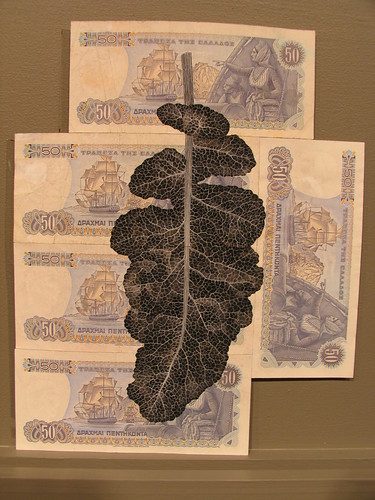
When my boat comes in (detail)
Fiona Hall - 2002 - present - gouache on banknote


When my boat comes in (detail)
Fiona Hall - 2002 - present - gouache on banknote

Tuesday, March 4, 2008

Anatomy, sardines and forest


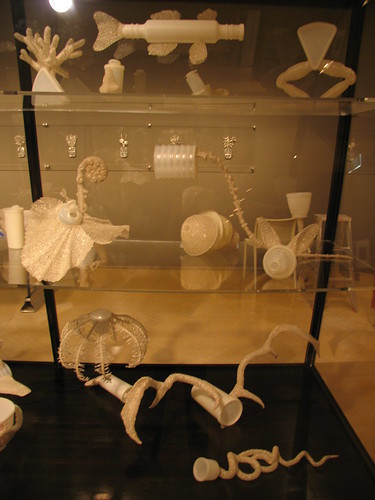
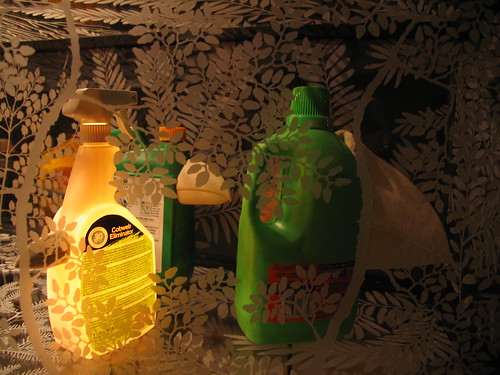
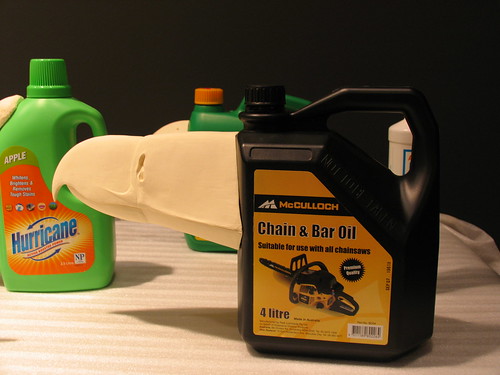
Mourning Chorus - extinct fauna of Aotearoa, and grease.


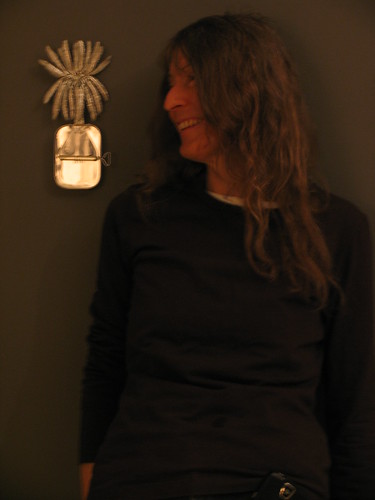
Fiona Hall infront of one of the Paradisus terrestris series


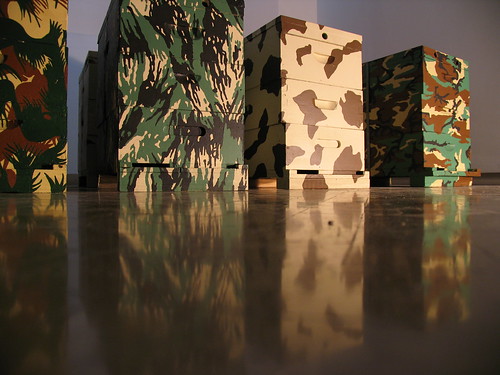
Breeding Ground - 2007 - camo beehives of terrains and plant species throughout the world


Morality Dolls - the seven deadly sins - they jiggle when you pull the string...


Detail of Words

Today the head of the installation team at the MCA, Tony, said to me "this is the most intricate install that we've ever done... no, seriously..." so that's why I'm pooped. Thought there must be a reason.

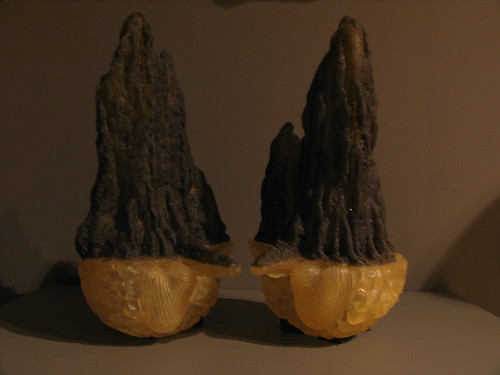
Today I unpacked a variety of extinct New Zealand birds beaks (attached to the bottles of cleaning products), laid out 94 botanically rendered paintings of 94 leaves on 94 clusters of bank notes (some of the banknotes being from 1864, by the way), and also helped unpack 7 large-scale human brains with insect nests (cast in resin) hanging off them.

Fiona is holding up admirably in the face of an overwhelming number of tasks, all of which must be done by tomorrow afternoon. Both the work with the brains/insect nests and the work with the bird's beaks arrived today from the fellow who cast them, so, on top of installing a very major show, Fiona was also sighting a bunch of major new works for the very first time... two days before her opening... jeez. I would be packing it entirely...

Saturday, March 1, 2008

Boxes and birds nests


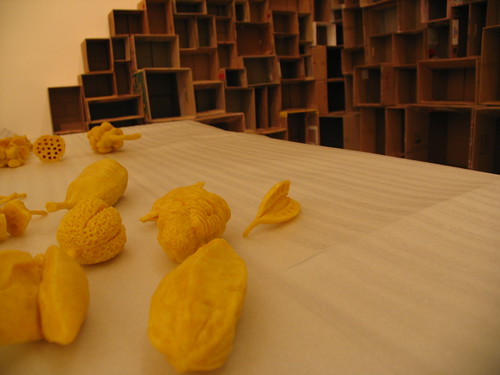
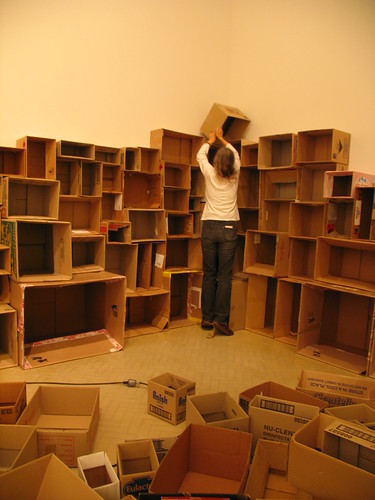
Give a dog a bone - seedpods carved from sunlight soap, with their recently completed DIY ikea shelving made of the most interesting cardboard boxes we could find.


Give a dog a bone - Fiona building the cardboard empire


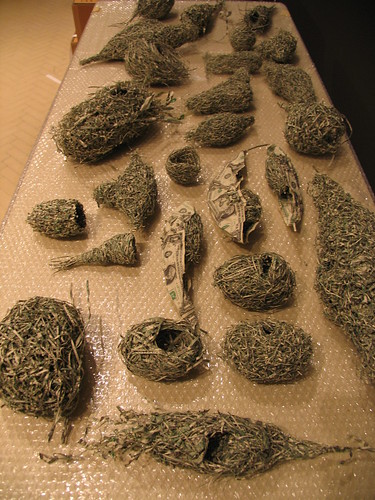
Tender - biologically-exact assorted species of birds nests constructed from US dollar bills... on the table and ready to hang in their brand-new cases, built for the occasion


Scar tissue - objects knitted from VHS video tape... still in their boxes. I quite like them in their boxes...


Give a dog a bone - closeup of banksia pod carved from sunlight soap

Getting to handle and help install (yes, with gloves on) artworks that you've loved for years is a special experience. I am actually a little sad once the work is fully installed. Now it is perfect, just in the right place. Now it is untouchable. Now it doesn't need my help anymore. Now it stops being something i can touch and smell and understand, and becomes the exhibit. And I cease to be part of it's life, and become just another viewer.

Weird stuff. I'll try not to sound too glowing about all this. But holding a Fiona Hall birds nest made from American dollar bills (a Queensland Lyrebird's nest, to be precise) in my own two hands is a little like holding a dear friend's newborn. It's really quite lovely. If a little daunting.

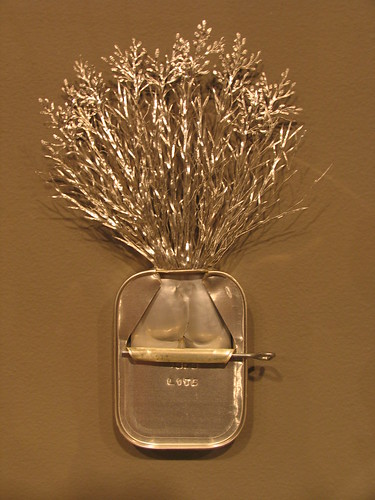
But this is the experience I'm lucky enough to be in the middle of, until this coming Thursday, when Fiona's major retrospective show Fiona Hall: Force Field opens at the MCA here in Sydney. Every day we've been wrangling soap carved from banksia pods, nests made from legal tender and sardine tins containing genitals and sprouting trees all into their rightful places within floors 1 and 2 of the MCA. Along the way, I've been learning a heap about the works ... all of which is making my brain boil with ideas and projects and, most useful of all perhaps, gaining insight into Fiona's process and concerns. The lady is both a trojan and a treasure. She's great fun, and mad as a cut snake.

I think this looks like being the first major stint of the mentorship that I'm doing with Fiona over the next six months or so... during the lead-up to her exhibition, I'm acting as an assistant of sorts. Fortunately Fiona is incredibly prolific so this retrospective involves installing heaps of intricate works, which means I have plenty to do, and am not just either shadowing the artist or standing around trying to look official in a jaunty scarf.

So, despite having now spent two weeks straight here in Sydney town without as much as a sniff of the country air of home, I am, in a different way, spending my days working with seed pods and seedlings. It's just that they're made of soap. and sardine tins.

Friday, February 22, 2008

About, above: Day 1


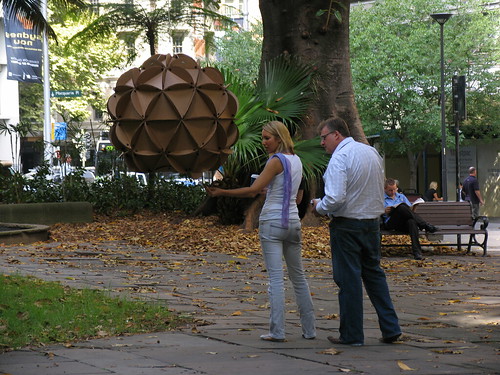
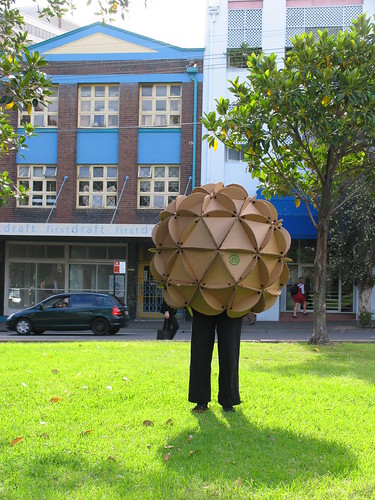
Cardboard Planetarium, Macquarie Place, 7am


Macquarie Place, 9.20am


Hyde Park, 10.30am


Inside the Planetarium, 10.35am


Macquarie Place, 10.50am


Hyde Park, 8.15am


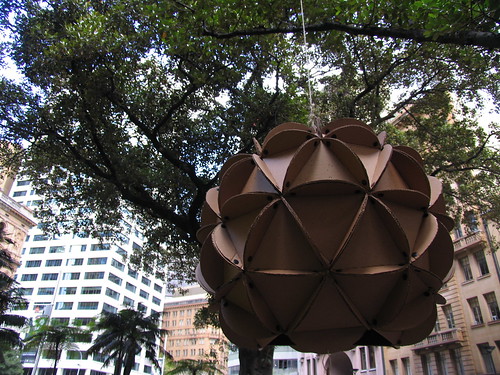
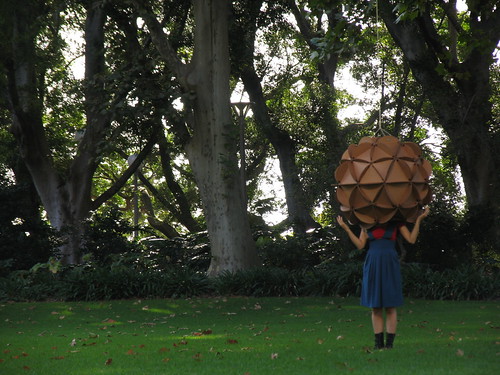
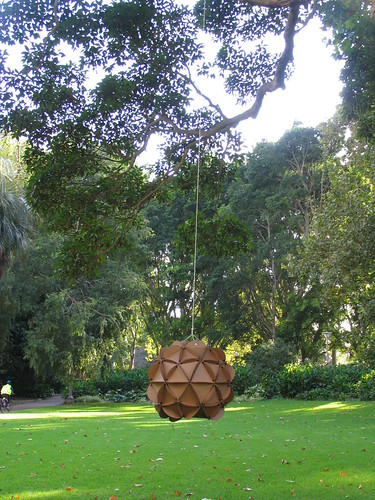
Three cardboard planetariums, installed throughout the Sydney CBD. You are welcome to duck inside, and to stand for a moment (or as long as you like) inside a solar-powered simulation of the night sky.

These cardboard universes, created with pinholes, contain a starchart accurate to 12 Midnight on Friday 22nd Feb, 2008. A solar-powered simulation of what is hidden, about and above, on a nightly basis... full project description.

Thursday, February 21, 2008

About, above: Locations


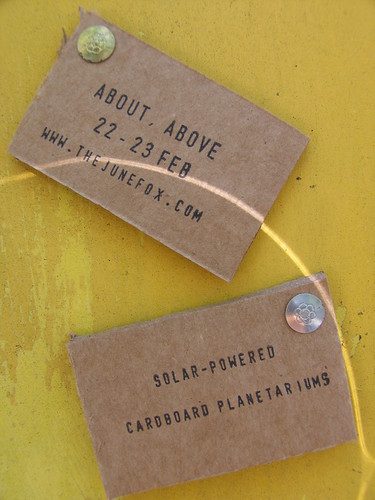
fliers for the event - made from scraps of genuine planetariums!

About, above: Part 1

solar-powered cardboard planetariums.
Friday 22nd - Saturday 23rd February, 2008

Viewing welcome at the following locations:

Friday 22nd onwards, starting at sunrise:
Hyde Park (nr Park St)
Macquarie Place (nr Customs House)

Saturay 23rd onwards, starting at sunrise:
Belmore Park (nr Central Station)


Three cardboard planetariums installed throughout the Sydney CBD , rain, hail or shine. You are welcome to duck inside, and to stand for a moment (or as long as you like) inside a solar-powered simulation of the night sky. Full project description.


The planetariums are both delicate and temporary. Being installed, as they are, in public spaces, it is hard to say how they will fare and how long they will last. If you cannot find the planetarium that you have come to visit, it is possible that it has been re-purposed, or transplanted by someone... try visiting one of the other planetariums on the map.


Enjoy! Comments and feedback very welcome.


View Larger Map

Tuesday, February 19, 2008

About, above: INVITATION to Part 1.


Cardboard planetarium - first outing.

Please be advised that on Friday 22nd + Saturday 23rd February, 2008, there will be three Cardboard Planetariums installed throughout the Sydney CBD, rain, hail or shine. You are very much invited. Details of exact locations will be advised on this website on Thursday 21st Feb.

The splendor of the night sky has been a source of wonder, discovery and agitation for our species throughout human history. The observation of the heavens has defined religions, revolutionized scientific thought, guided navigators, and inspired countless mythologies. It has been said that 'they who cannot see the night sky, cannot see...'

In most urban environments, and cities in particular, light pollution renders the night sky down to a few of the brightest stars and planets, obscuring the majority of what has been so essential to our species' development. Perhaps it doesn't matter. Perhaps the stimulus of stargazing is not essential to a happy life. But just in case...

The Cardboard Planetariums will be found throughout the city, hanging in space, rotating lazily around their central hanging axis. You are welcome to duck inside, and to stand for a moment (or as long as you like) inside a solar-powered simulation of the night sky.

These cardboard universes, created with pinholes, contain a starchart accurate to 12 Midnight on Friday 22nd Feb, 2008. A solar-powered simulation of what is hidden, about and above, on a nightly basis.

About, above is a project in two parts, created by Kirsten Bradley during her time as Artist-in-Residence at Firstdraft Gallery, Sydney. Part 1 is the installation and documentation of Cardboard Planetariums throughout the Sydney CBD in mid-February 2008. Part 2 is an installation at First Draft Gallery in April, 2008.

About, above
looks at pattern recognition and simulation, how we view 'nature', and what constitutes 'the natural' at this point in western thought. In a world out of balance, About, above also touches on points of Geocentricism, and asks how, as an urbanised culture, have we chosen to see as we do, for all this time.


This project has been made possible by Firstdraft Gallery through their Emerging Artist-in-residence program, and by EXPERIMENTA through their Media Art Mentorship program.

Firstdraft is supported by NSW Ministry for the Arts and the Australian Government through the Australia Council for the Arts, its arts funding and advisory body. EXPERIMENTA 's Media Art Mentorship projec
t has been assisted by the Australian Government’s Young and Emerging Artists Initiative through the Australia Council, its arts funding and advisory body. EXPERIMENTA gratefully acknowledges the assistance of CraftSouth to the EXPERIMENTA Media Art Mentorship Program.

Friday, February 8, 2008

my arm hurts


my first two small cardboard spheres... hard-won little cardboard worlds that they are...

I have now two small planetariums mostly finished, after much, much, much cutting of cardboard circles, and the makings of a third planetarium, which will be double in size.

As sore as my arm currently is, I must say there is no substitute for hard labour to familiarize oneself with the particulars of creation. I could now make 2v geodesic domes (that's the name of the particular geodesic structures I've been making) in my sleep, with my sore hand tied behind my back. Which is just as well, cause until you get your head around the construction of geodesic structures, they're really confusing.

Thank crikey for a couple of essential online resources - particularly this fab 'how to make a cardboard dome for your classroom' page, and this excellent dome calculator, which helped me get all the lengths right.

Next innings, it's all about mapping accurate starmaps onto the domes. Which will be sweet confusion all over again, but at least i dont have to cut out anymore cardboard circles.

Monday, February 4, 2008

pulling the sky past you...

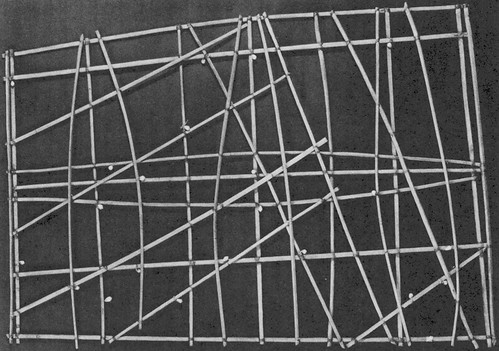
a sea chart or stickchart of some of the Marshall Islands, showing the islands as the nodes (made of cowrie shells) , the swells as curved lines, and the currents as straight lines. This chart would have been used to teach navigation on shore

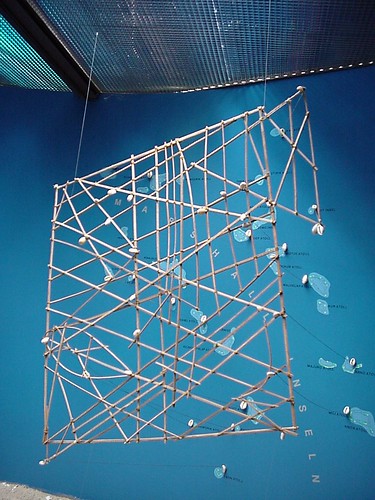
another stickchart of some of the Marshall Islands, this time made by a German dude as part of an exhibit... you can see that the cowries on the chart correspond (indeed, are actually linked with string) with a conventional map of the Marshall Islands on the wall behind... for the purposes of over-explanation...

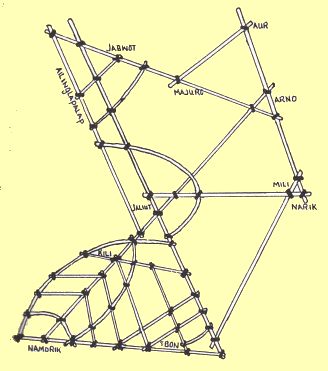
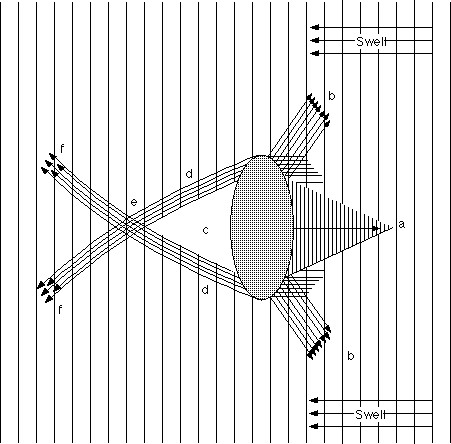
detail of chart outlining the relationship with swell and islands, again as a navigational tool... if you're at a point where the swells are behaving like (f), you are therefore able to calculate your relative position to the island...

another stickchart, again showing islands as cowries, curved lines as island-refracted swells, and straight lines as currents

and another stickchart of the Marshalls... when I first saw these, I was a bit suspicious that they all had a boat outlined in them... me and my pea-sized brain... a boat is a refraction is a leaf is a swell-line...

Micronesian navigation is something I'm looking at because it seemed to be a very intricate and yet a very pliable form of navigation... a set of strategies for dealing with travel on highways constantly in flux - i.e. the ocean passages between the myriad of islands that is the Polynesian triangle...

The anecdote that nudged me in this direction was from my very wonderful friend, Annemarie Kohn, who mentioned to me the Micronesian navigational concept of a navigator or traveler remaining stationary in their canoe while 'pulling the sky past you', when traveling at sea. Apart from being an overwhelmingly romantic moment of magical realism, this concept really got to me.

It turns out that the Etak or Hatag system only employs this stationary/contingent system of navigation as a device, as a way of thinking about distance when traveling from one island to another... you, the navigator of the boat, are stationary in the universe, and by having intrinsic knowledge of the ocean, currents and placement of the stars and islands which you have learnt since you were young, you can twist, turn and push the universe around and past you, until your destination island shows up.

However... still within this system; if you figure out that your boat has gone off course, the universe becomes stationary and you become the moving object, until such a time as you have regained a sense of where you are in the system... at which point, you become stationary again, and continue to pull the sky past you...

There are so many deliciously un-European aspects to Polynesian navigation that it is truly stunning... and it makes my brain purrrrrr.

In sort-of but not-really complete contrast, all this has made me remember a reference to a passage by Rebecca Solnit in her seminal book A field guide to getting lost:

Malcolm... brought up the Wintu in north-central California, who don't use the words 'left' and 'right' to describe their own bodies but use the cardinal directions. I was enraptured by this description of a language and behind it a cultural imagination in which the self only exists in reference to the rest of the world, no you without mountains, without sun, without sky. As Dorothy Lee wrote, "When the Wintu goes up the river, the hills are to the west, the river to the east; and a mosquito bites him on the west arm. When he returns, the hills are still to the west, but, when he scratches his mosquito bite, he scratches his east arm." ... In Wintu, its the world that's stable, yourself that's contingent, there's nothing apart from its surroundings.

I've gathered the links I've found on micronesian navigation here...

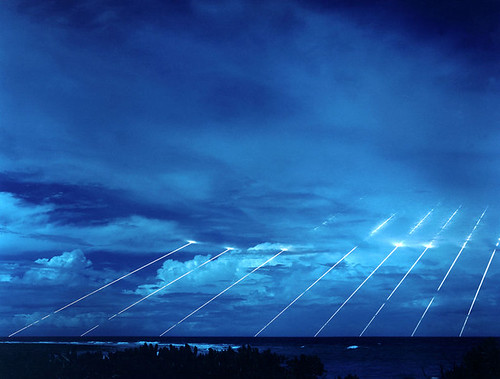
what's happening at the Marshall Islands these days... US missile testing

Sunday, February 3, 2008

immutable

Moon in an eccentric orbit with epicycles - Andreas Cellarius (c. 1596-1650)... the orbits of the moon around the earth - rather convoluted to allow for the intricacies of sustaining geocentricism

The shift in perception from an earth-centered universe towards a universe where we, the earth, revolved around something else, is a somewhat hairy patch within astronomical history...

I'm still sorting it all out for myself, but the basics are as follows: until the early 1600's, it was accepted in Europe that the earth was the centre of the universe. All the planets (which the sun counted as one of), the moon and 'the rest of the stars' were all lodged within spheres of crystal, which rotated around the earth. The moon was wedged in the closest crystal sphere, followd by the planets in a slightly larger (and therefore, further away) crystal sphere, followed by all the rest of the stars, which were locked into a single third sphere which rotated around the whole lot.
Planetary orbits around the earth - Andreas Cellarius (c. 1596-1650)

The heavens were immutable and permanent, the rotation and motion of the stars regular and un-ceasing. For the heavens were perfect and unchangeable, as god had made them that way.

Until upstarts like Copernicus and Galileo came along and buggered everything up, by offering (and proving via observation) plausible alternatives to this system. And then in 1604 there was a supernova - (the death of a star - the star gets MUCH brighter for a couple of days and then phuts out completely) which added to the grief of the situation, because this particular star wasn't visible to the naked eye prior to going supernova, so all of a sudden there was this really bright star for three days, which then disappeared... and this didn't fit in with the bit about all things being immutable and unchanging, obviously...
A depiction of the Copernican system - Andreas Cellarius (c. 1596-1650)... an alternative, heliocentric model. It took a while to catch on.

The thing that's tickling me at the moment is the lengths to which pre-1600 astronomers had to go to make all the motions of the heavens fit in with the geocentric idea (which was pretty much everything)... and the resulting charts and maps... great stuff...

I often wonder if the position we've put ourselves in, as western society, doesn't seem to indicate that we still think everything revolves around us... however these days we don't need illustrated charts to prove ourselves as the centre of the universe.. we have so many other ways... and we certainly don't need the church to tell us that we are the reason for creation, now that we've got... well, the ability to satisfy our every want, i guess...

Which brings me back to the night sky. Within a city, in the middle bit, the heavens and the general universe at large could be mutable or immutable or whatever they damn well please... it wouldn't make a jot of difference - you can't see it anyway, and it's not of any concern to you. Which makes me wonder about ways of seeing, and the perception of the world beyond the tops of the skyscrapers.. is there anything there? Maybe not. Or maybe only when the Goodyear blimp goes past does a pocket of the sky temporarily exist... and then fall back in on itself and revert to a blankness, with no relevance or meaning to us...


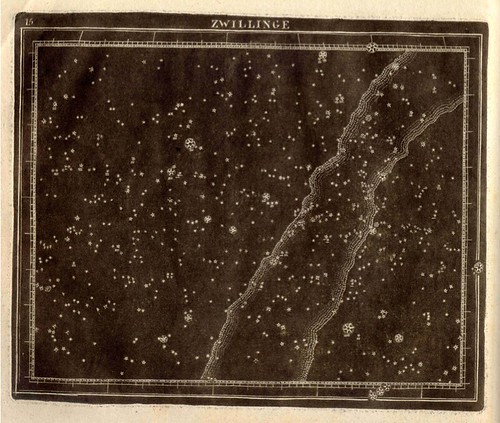
Goldbach, C. F. (Christoph Friedrich), 1763-1811... I take it Christoph wasn't in the city when he sketched this one.


No that there's much to see in the sky above Sydney today... look up and you'll get a big fat raindrop in your eye... which, by the way, the very fabulous artist Joan Fontcuberta used as constellations onetime (raindrops, that is - with insects and dirt) in photographs of a windscreen...